2025 TMU x BE x SCHS Demo Day: International Medical Startups Flourish as Taiwan Becomes a Hub for MedTech Innovation
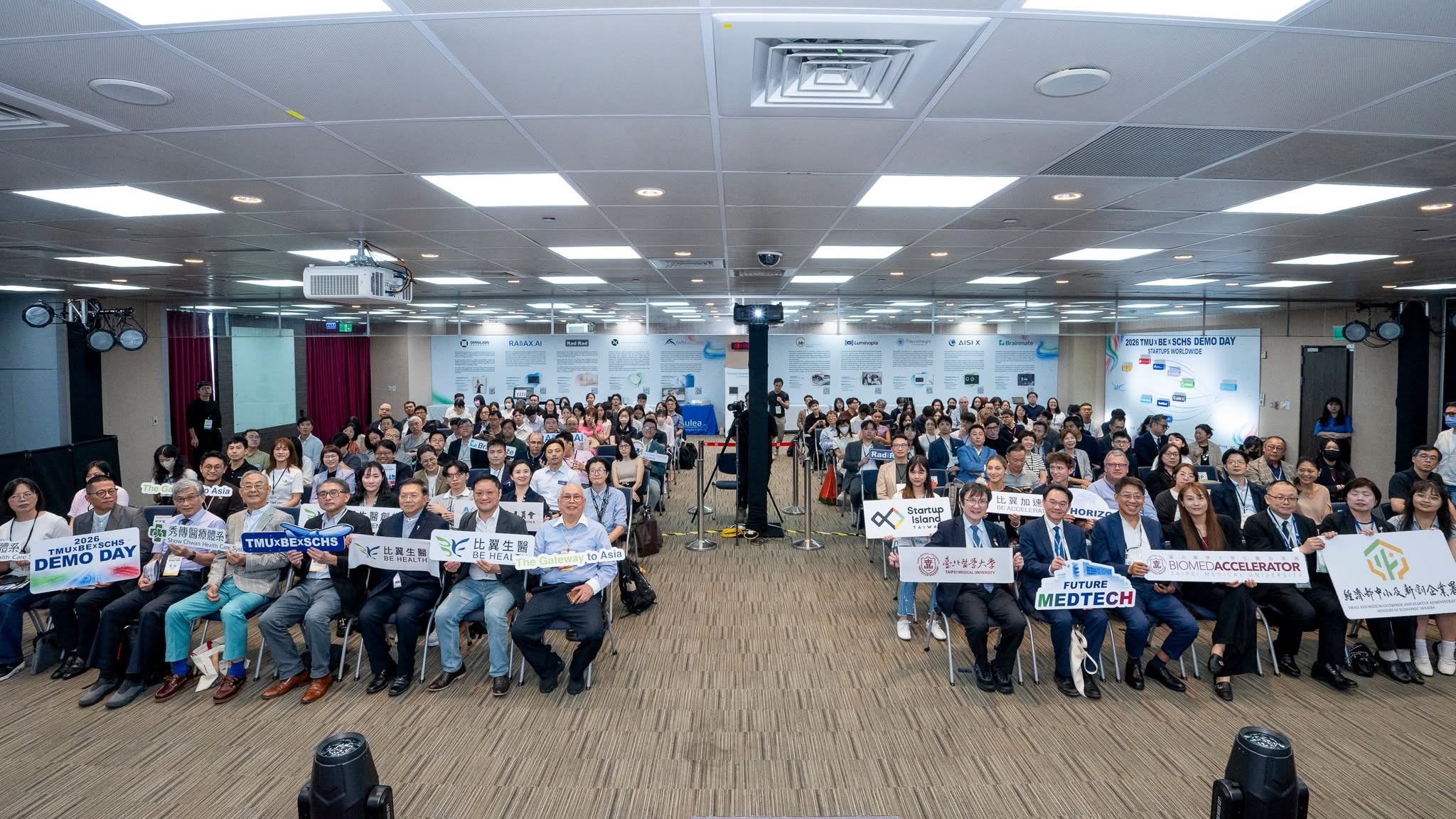
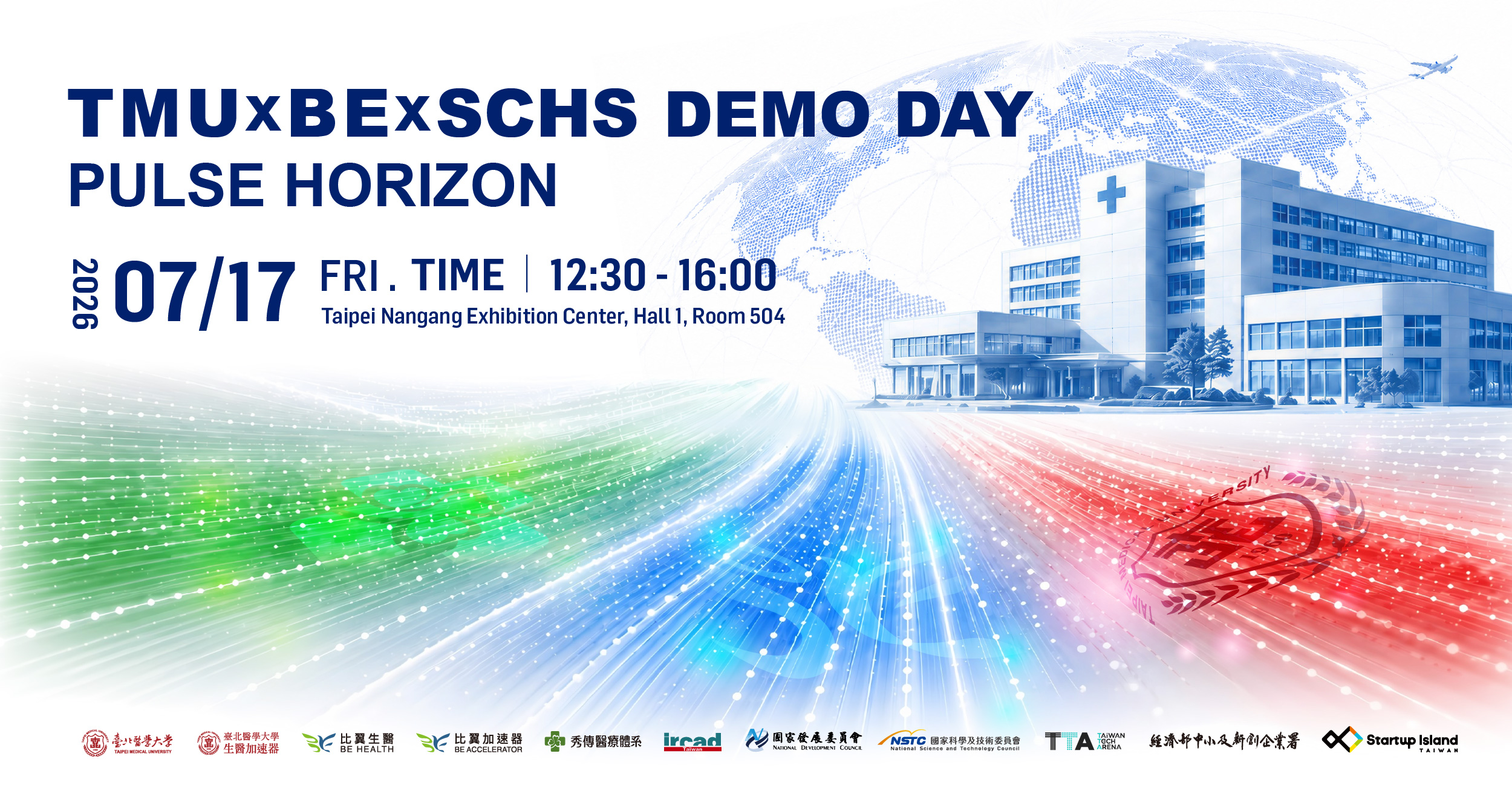
The “2025 TMU x BE x SCHS Demo Day,” co-hosted by BE Health, Taipei Medical University (TMU), and Show Chwan Health Care System (SCHS), took place on July 25, featuring 16 medical startup teams from nine countries. Notably, this year marks the first time since the inception of the “PoC Program” that the number of overseas teams has surpassed local Taiwanese startups, underscoring Taiwan’s growing momentum as an Asian hub for medical innovation.
Diverse Innovations from 9 Countries: 16 Startups Showcasing Global MedTech Applications
Of the 16 teams, nine hailed from countries including Japan, Switzerland, Australia, South Africa, South Korea, and Singapore. Their technologies span AI diagnostics, precision medicine, digital therapeutics, and medical devices. Applications are equally diverse, covering fetal monitoring, wound care, stroke prevention, and cancer detection.
-
Fetal & Neonatal Care: Singapore-based E3A utilizes its “Modoo” passive non-ultrasound fetal monitor to provide affordable, non-invasive neonatal jaundice monitoring. Japan’s Gifts offers a wearable device for tracking fetal weight and movement, using 3D reconstruction to supplement traditional ultrasound. South Africa’s VitruvianMD employs AI to enhance the efficiency of IVF (In-Vitro Fertilization).
-
Stroke & Brain Health: Switzerland’s NanoFlex Robotics and South Korea’s NearBrain utilize robotic-arm remote diagnostic solutions and 3D brain simulation, respectively, for stroke prevention and emergency intervention.
-
Diagnostics & Oncology: Canada’s PragmaClin uses AI to assess Parkinson’s disease. In oncology, G-Tech Bio (a TMU spin-off) focuses on immunotherapy targeting cancer stem cells to prevent recurrence, while A-Eye Health leverages AI to interpret leukemia data 90% faster, enhancing clinical decision-making.
Wound Care and Surgical Efficiency
In trauma care, Japan’s fcuro, Belgium’s twinskin.care, and Taiwan’s Acrobiomedical target open-wound treatment. fcuro uses AI for rapid trauma diagnosis, bypassing the wait for CT results; twinskin.care employs 3D scanning for wound modeling; and Acrobiomedical utilizes high-performance fish collagen for skin recovery.
For surgical precision, Mesobiosys developed “FINEscope,” a non-invasive microscope to replace traditional skin biopsies. Andros Biotech focuses on miniaturized imaging with single-use endoscopes. Australia’s Gyder Surgical offers non-invasive, navigation-free micro-instrumentation for hip surgery, while Taiwan’s Sinfong provides bone density assessment solutions for elderly care. Additionally, Taiwan Medical Electronic produces solutions for skin issues like hyperhidrosis and hair loss.
Taiwan as a Global Dual-Testbed for Capital and Market Validation
Arthur Chen, Managing Partner of BE Health Ventures, noted that the accelerator has nurtured 150 startups from 19 countries over the past year—all utilizing Taiwan’s clinical resources. This highlights Taiwan’s pivotal role in market validation. Furthermore, portfolio company CapsoVision went public on NASDAQ in July, signaling a recovery in the capital markets.
The event featured a panel discussion on capital strategies with Nobuhiro Yagi (Kyoto University Innovation Capital), Pei-Ching Kao (Taiwan Stock Exchange), and Natalie Torin (Woods Capital).
-
Nobuhiro Yagi emphasized the rising demand for deep-tech in Japan and the role of university VCs in translational medicine.
-
Natalie Torin highlighted Family Offices and ESG Capital as booming funding sources for MedTech.
-
Pei-Ching Kao pointed out Taiwan’s strategic value as a “Global Dual-Testbed,” offering both capital resources (like the Innovation Board) and technical assets (Semiconductors, ICT, and National Health Insurance data).
Many of today’s 16 startups are already in talks with TMU and Show Chwan for clinical validation and regulatory guidance (TFDA), while exploring market expansion into Southeast Asia and Japan, proving Taiwan’s core value in the international MedTech ecosystem.