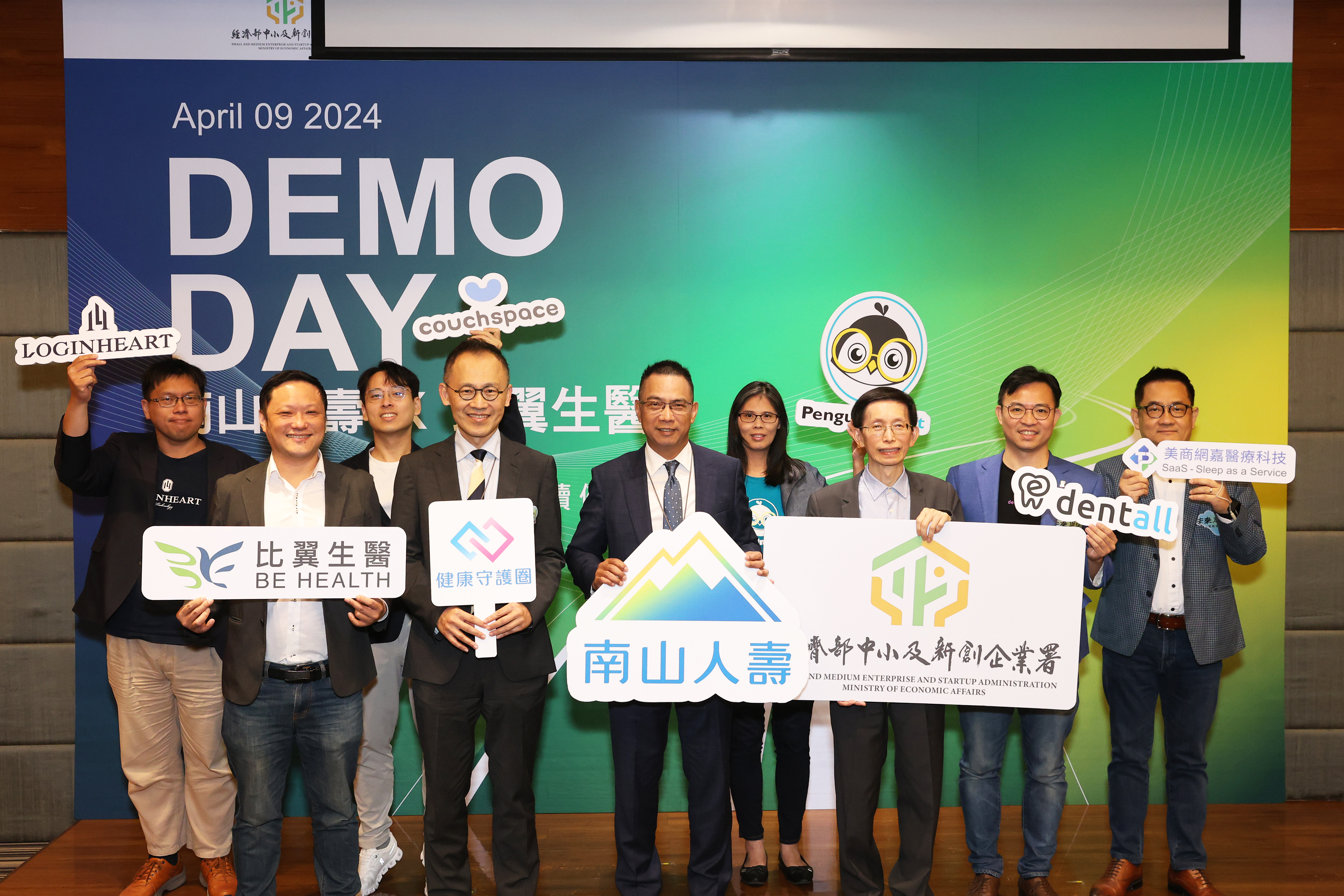
Hosted by BE Health

Congratulations to the PoC Japanese Team – F.MED for the Asahi Shimbun Feature!
Why did Fukuoka-based medtech startup F.MED choose to come to Taiwan for their PoC, using robots in place of surgeons’ hands?
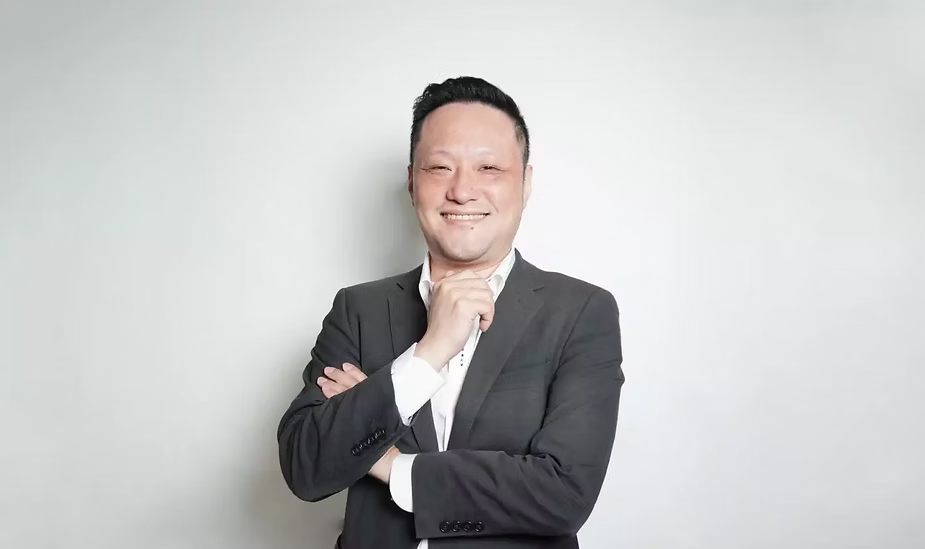
Although Japan has strong medical research capabilities, not many people are willing to start a venture. Keita Shimomura, Co-founder and CEO of F.MED, originally worked at a medical equipment distributor. By chance, he saw the demand and commercial opportunity for microsurgery, and decided to venture out. Why did he give up a stable corporate position? And under the support of the Fukuoka government, why did they choose Taiwan for their PoC?
ounded in 2021 and located in Fukuoka City, F.MED emerged from a research team at Kyushu University, specializing in “microsurgery assistance robots” that help surgeons perform precise microsurgery. With a capital of US$2 million, the company has just completed its Series A funding round, backed by investors including FFG Venture Business Partners, Japan’s 100-year-old medical wholesaler ASTEM, and independent VCs and corporates. They plan to launch a Series B round in early 2026.
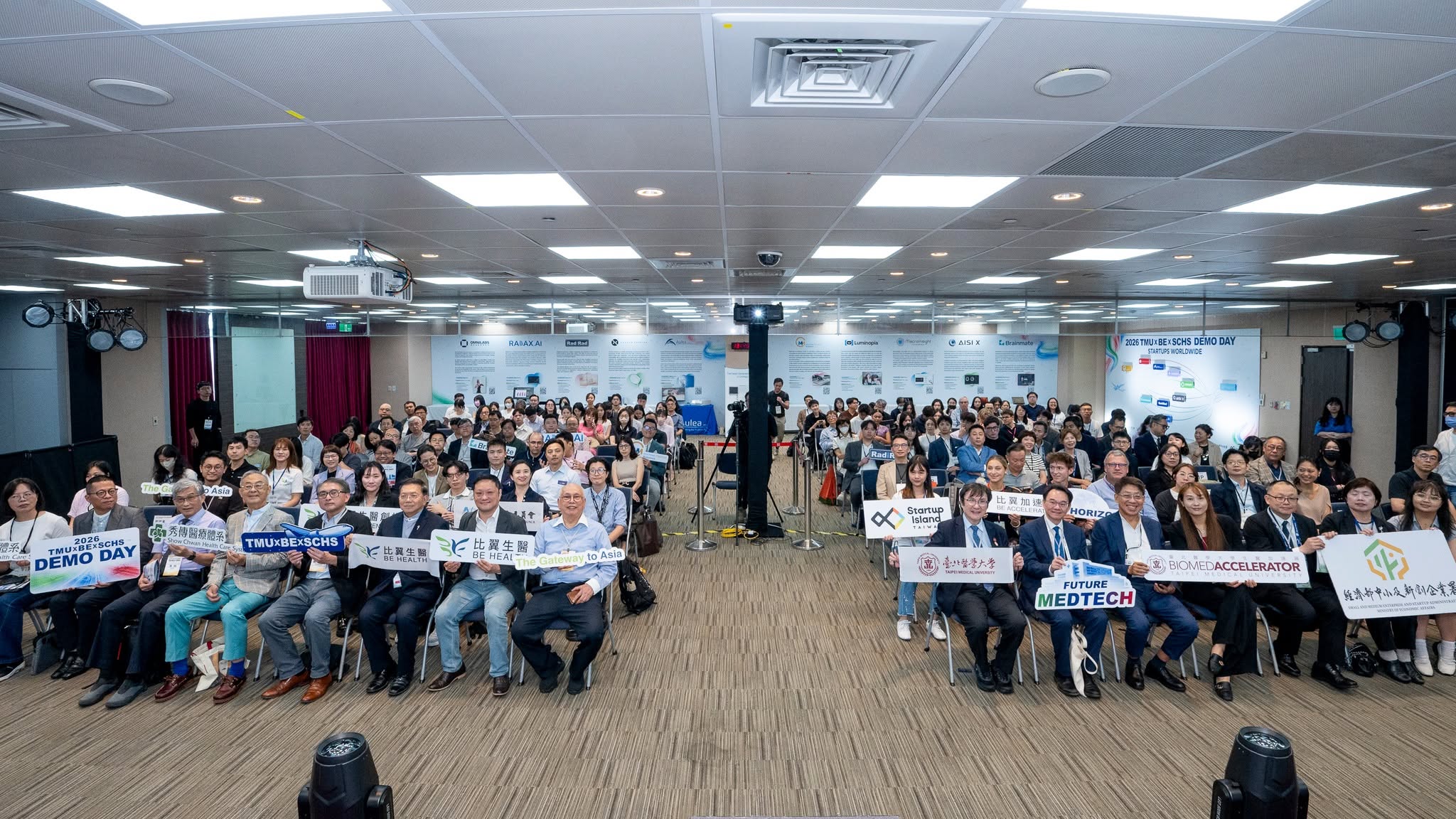
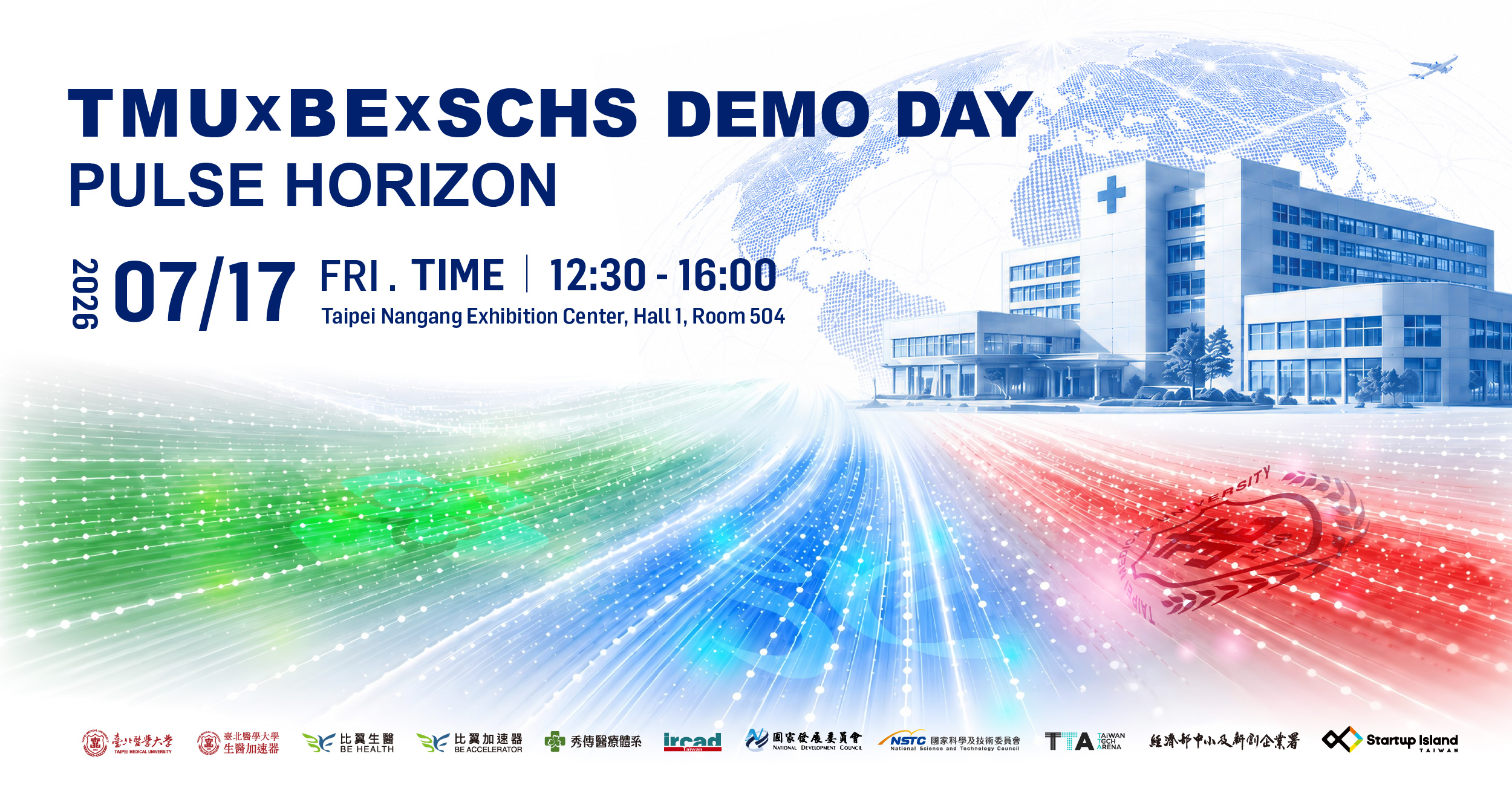
In July this year, F.MED attended the Demo Day hosted by Be Accelerator in Taiwan, aiming to seek partners in Taiwan for their PoC. The final product is expected to launch in 2026.
Keita Shimomura is currently 50 years old. Typically for a Japanese person at this age, unless one has studied abroad, conversational English may be limited—but the interview required Japanese translation assistance. Yet Shimomura responded fluently in English throughout. His language ability reflects a different mindset compared to typical Japanese professionals.
Entrepreneurship to ‘Make a Move Before Retirement’
“I couldn’t resist the temptation to start something new,” Shimomura said with a smile. With over 20 years in medical equipment marketing and business development at ASTEM, he recently rose to manager level at age 48, while the company’s retirement age is 58. “I thought: if I only have ten years left in the market, I should seize the opportunity to do something interesting—something I can look back on proudly after retirement.”
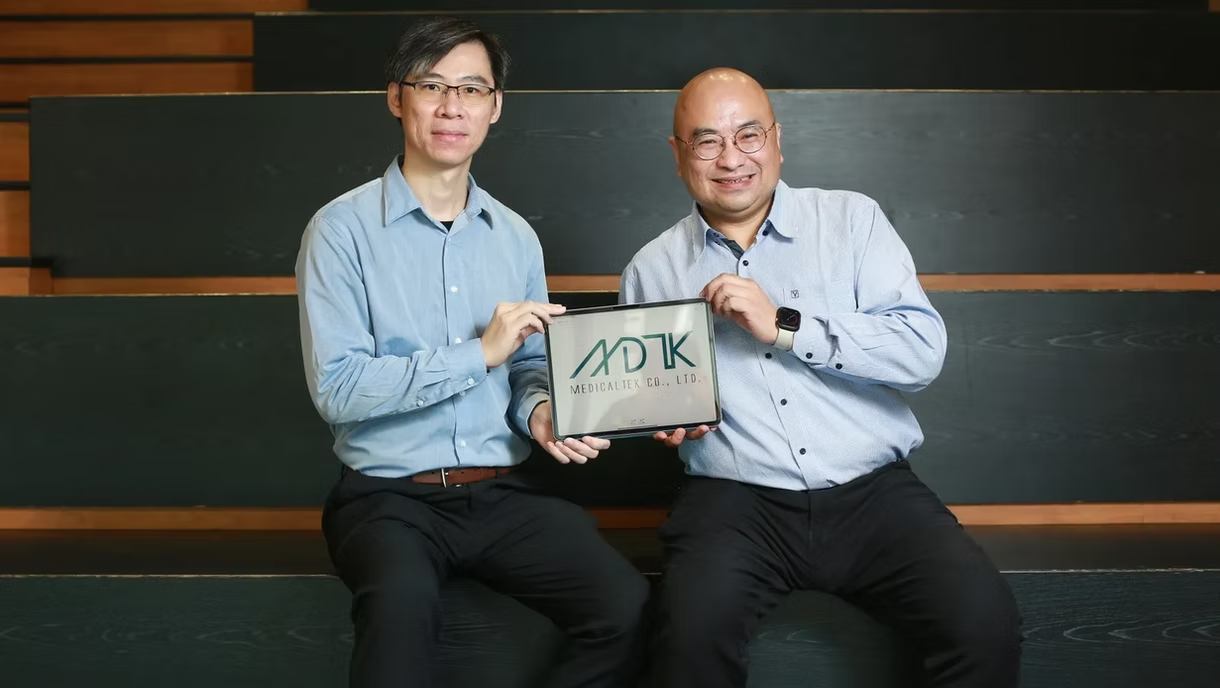
By chance, he was assigned to a research project at Kyushu University as a project manager and met his future co-founder and CTO Susumu Oguri.
Oguri, originally a systems engineer for automotive production equipment, joined Kyushu University’s Center for Advanced Medical Open Innovation in 2013, focusing on microsurgery robots. The two found a perfect match and recognised the large potential of microsurgery.
“I found that many patients lost better treatment opportunities because of technical limitations. At the same time, I believed the commercial potential of this product was very high.” After discussion with Oguri, they believed that after a few more years of research they could successfully bring the product to clinical use. And so, what began as an academic project for a paper turned into a business venture. Born in 1974, they embarked on entrepreneurship together.
Starting a business in mid-life—wasn’t he worried about failure? “Of course, as a man with a family, I was worried about risks. But I’m quite optimistic—I hope to save more patients’ lives and enrich my own life story.” He admitted: “Of course, I didn’t think that far at the time. I’ve faced many unexpected challenges, but even if I fail, I believe I’ll find the next job.”
What comes through in the conversation is that if you want to motivate typically risk-averse, change-averse Japanese people to step out of their comfort zone, the key is the value of the work and its social impact.
Giving Patients Better Surgical Options: Microsurgery
Microsurgery uses a high-magnification surgical microscope to magnify to levels the naked eye cannot see, enabling surgeons to cut and suture extremely small structures such as micro-vessels, lymphatic ducts and nerves. It is used in reconstructive surgery for head & neck tumour removal, breast reconstruction after mastectomy, or neck/esophagus reconstruction.
Shimomura gave the example of patients whose lymphatic systems are damaged after cancer treatment, causing fluid accumulation and swelling in parts of the body. While massage or compression garments help relieve symptoms, a definitive remedy is a “super-microsurgical lymphatic-venous anastomosis”.
That surgery disconnects the patient’s lymphatic duct and reconnects it to a nearby small vein to restore lymphatic flow and improve swelling. The advantages: small incision, minimal pain and fast recovery.
Easier said than done. The lymphatic ducts are only 0.5 mm or 0.3 mm in diameter. Achieving suture and knotting and connection is extremely difficult—not all surgeons can perform this. “It’s like when you’re threading a needle and your hand trembles slightly. That’s normal. Humans have physiological limits, and surgeons also have them. It takes years of training to steady one’s hand—but not all doctors manage.”
If humans can’t, let machines help. F.MED develops a microsurgery assistance robot so that the surgeon controls a used console and the robot replicates the movements in the patient’s body—removing the hand-tremor limitation while delivering the excellent results of microsurgery.
In short: the surgeon is still performing the operation, but the robot makes the operation more stable—a “human-machine symbiosis” concept. Shimomura believes that, as more surgeons gain microsurgical capability, more patients will be saved. “Many patients don’t even know the option of microsurgery exists.”